Comment: The public forced the state to act on South Africa – it can do so again
You get a sense of how theatrical parliamentary politics is while perched in the gallery above the Dáil chamber.

You get a sense of how theatrical parliamentary politics is while perched in the gallery above the Dáil chamber. I was there a few nights ago watching a debate over Sinn Féin’s stop the game motion, which called on the FAI to refuse to play the upcoming match against Israel, and on the state to cover any potential financial penalties.
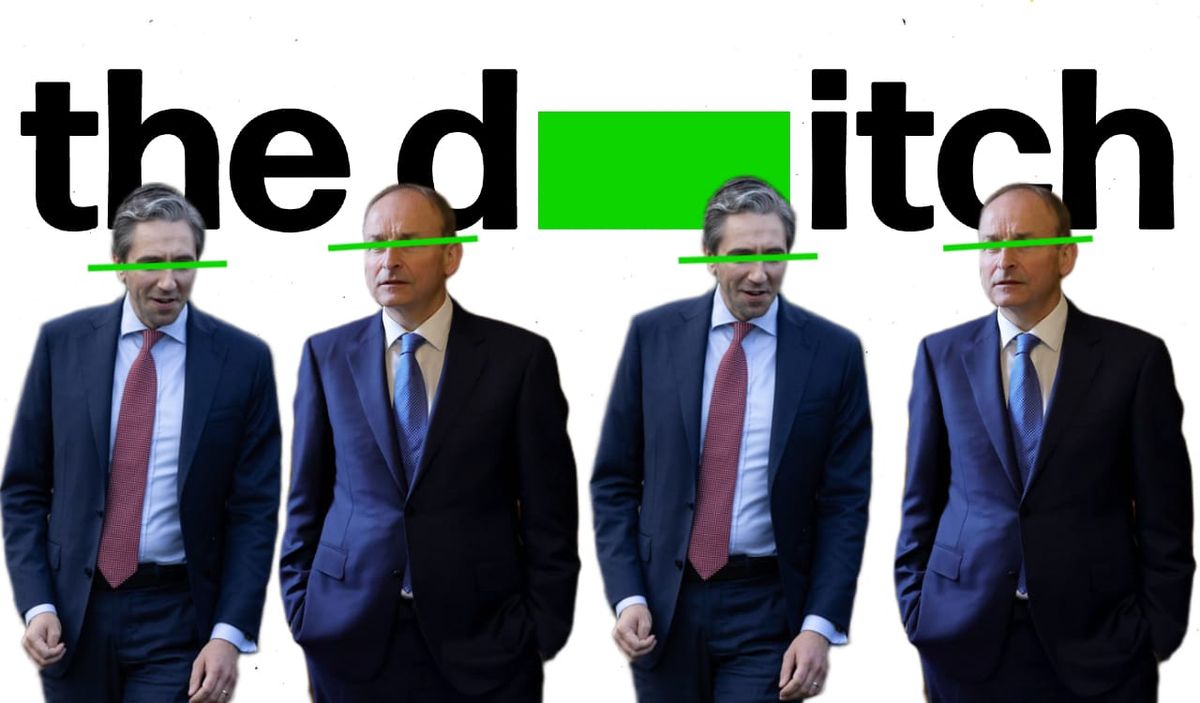
Fianna Fáil junior Charlie McConalogue explained why government put forward an amendment to the proposal. Government is – an expression you’ll have heard before – deeply concerned about atrocities against Palestinians, he said, and has been pushing for the EU – someone else – to do something. But it will not support a sporting boycott against Israel nor will it intervene in this instance. The amendment observed that sporting bodies are independent. It said government has no role in determining sporting fixtures – adding FIFA, UEFA and FAI to the bodies the state hides behind when asked to take action against Israel, a country that is, according to taoiseach himself, committing the crime of genocide in Gaza.
But we can't possibly intervene in sports, wasn't the position Fianna Fáil and Fine Gael took a few years ago. Yesterday The Ditch reported that in 2022 Jack Chambers as junior sport minister wrote to Irish sporting bodies imploring them to support a ban on Russian and Belarusian athletes in international sports. In speaking notes from a virtual summit he took in on 3 March that year hosted by British secretary of state Nadine Dorries, he emphasised that sport "can have no truck with countries or regimes who wilfully ignore international law and attack another sovereign country”.
McConalogue and Noel Grealish, the only two government TDs to attend the Dáil proceedings about the Ireland-Israel match, had to have known they were being disingenuous. They know there is precedent for seeking to prevent sporting events on humanitarian grounds. In 1981 Charlie Haughey told the IRFU it would be inappropriate for Ireland to tour South Africa. In 1999 the Yugoslavia football team was refused entry to Ireland because of Serbian war crimes. And McConalogue and Grealish have to had understood that the reason we have not, since October 2023, enacted a single policy that might harm Israel is fear of reprisals from Washington – a reality the Department of Foreign Affairs acknowledged in its recent impact assessment for the Occupied Territories Bill.
Yet both gave performances off their prepared lines anyway, as if those speaking were involved in a mere dispute over the FAI, not the extermination of an entire people. “National governing bodies in sport are independent," said McConalogue. Grealish later added his own flourish by chiding opposition for failing to wish the Irish women's football team well in a match that evening.
We’re talking about a genocide, I heard an exasperated voice beneath say, in response.
‘The most potential to change the fate of the country’
The next evening government voted to defeat Sinn Féin's motion as well as a parallel motion from the Social Democrats seeking Israel's exclusion from international sport. A few days prior Micheál Martin had told reporters "Europe needs to do more" to rein in Israel, which is responsible for, according to conservative estimates, almost 100,000 deaths in Gaza since October 2023.
This was a modest position for a guy who, at the UN last September, was happy to play the big man. “There cannot be business as usual in the face of genocide… to do nothing is not neutrality, it is complicity,” he said. “Genocide. The gravest of crimes in international law. All signatories of the Convention on Genocide are obliged to act to prevent and to punish it.”
Both motions represented were more than symbolism. Israel is afraid of boycotts – sporting ones in particular. Among the documents published as part of the US Department of Justice’s Epstein files is an email from Jeffrey Epstein to Noam Chomsky sent in 2015, relaying the private view of Ehud Barak, former Israeli defence minister and prime minister. A soccer boycott, Epstein wrote, was what Barak thought had “the most potential to change the fate of the country", that “the people really paid attention” when, the Palestinian Football Association nearly succeeded in having Israel suspended from FIFA at its congress in Zurich, only for the motion to collapse at the last minute after Israeli lobbying and the opposition of FIFA president Sepp Blatter.
“Our international effort has proven itself," said Benjamin Netanyahu, the Israeli prime minister for whom the International Criminal Court has since issued an arrest warrant.
Barak understands history. He knows the fate of another historic racist regime once it became isolated – an isolation that began, in part, the chamber heard the night it debated the Sinn Féin motion, because of the actions of Mary Manning, a Dunnes striker who refused to handle South African goods. The Irish public understands this too. Support for stopping the game has risen from 48 percent in March to 56 percent in June while opposition has fallen from 42 to 36 percent, according to a poll released by Ireland Thinks this week commissioned by Irish Sport for Palestine.
The match – for now – will go ahead at a neutral venue. The campaign against it continues. Israel shouldn’t be treated as a normal nation, least of all by one that intervened at the International Court of Justice in support of a case accusing it of genocide.
Fianna Fáil and Fine Gael opposed yet another measure that might damage the state of Israel. But this isn't over. Popular sentiment forced our ruling class to eventually do the right thing on racial supremacy in South Africa.
It can do so again.