Comment: A very large net
Daniel Kinahan, a man named in the Irish High Court as head of a violent crime family, is synonymous with what tabloid newspapers call "gangland", their term for the world of organised crime.

Daniel Kinahan, a man named in the Irish High Court as head of a violent crime family, is synonymous with what tabloid newspapers call "gangland", their term for the world of organised crime. We see him smiling and wearing designer clothes or standing next to famous athletes like Tyson Fury or attending sporting events. And less frequently – in just a few old photographs – he's in handcuffs, being bundled into the back of a police van.
Corners of social media used to joke about the net tightening around Kinahan. For more than a decade journalists quoting garda sources told us this net was “closing in" on the Dubliner – who was, rest assured, trembling in a bolthole in Dubai, where he moved alongside his brother and father after an attempt on his life in 2016 at a boxing weigh-in. Senior gardaí would hold press conferences, express their desire to bring the Kinahans to justice and headlines about their impending capture would follow. Any day now, they’d say. Closing in, the net, so it is. You’ll see.
It’s not clear why, after living on the Palm Jumeirah seemingly unmolested by authorities for so long, Emirati police finally arrested Daniel in April. Maybe it was his alleged links to Iran and Hezbollah, both enemies of the United States and Israel, allies of the United Arab Emirates. Or perhaps he’d become too much of a liability for whoever had likely been sponsoring him – whether that was intelligence agencies in need of whatever services he might be able to offer, or royalty selling sanctuary. Whatever happened, he’s in jail, soon to be extradited to Ireland following a reportedly failed appeal and, if found guilty, a life sentence.
The exact circumstances of Kinahan's arrest are murky and may never be known to the public. But one thing is clear: An Garda Síochána seized an opportunity to gloat and take credit. “We're going to be relentless around individuals who have caused murder and mayhem here in Ireland," a preening commissioner Justin Kelly told reporters on April 21st. “Responsible for, as you will all know, a significant number of homicides, including innocent people.” Detective garda Niall Hodgins, speaking at the Garda Representative Association conference in Westport the day before, said the guards had entered a period of “respair", a 16th century word that means fresh hope and recovery from despair.
A Kinahan trial, whenever it takes place, promises to be a spectacle greater even than the 2023 trial of Gerard Hutch. After years on the run, he was tracked to a restaurant in Spain, flown home on a military aircraft and tried for the murder of David Byrne, a Kinahan associate who died in the same 2016 attack that nearly killed Daniel. It took place over 52 days and saw the state accept evidence unlawfully gathered by gardaí. This evidence was so weak the non-jury Special Criminal Court, with its conviction rate of (in 2018) 94 percent, found Hutch innocent. Tara Burns, one of three judges presiding over the proceedings, expressed incredulity he’d been charged at all. “One wonders what the case was intended to be before the introduction of Jonathan Dowdall as a prosecution witness,” she said.
Compensation for humiliation
The Gerard Hutch debacle deeply embarrassed An Garda Síochána and the state. The guards and DPP wanted to imprison him so badly they were prepared to exaggerate their case, allowing him to walk free – which he did, out the front door of the Central Criminal Court, through a media scrum and into a taxi. Both will want to compensate for that humiliation with a successful Kinahan prosecution. So he’ll be subject to an extended perp walk and the state will seek to repurpose his image, once associated with total impunity, as a symbol of justice done.
“I feel like I’ve already got a life sentence,” Kinahan himself told podcast James English during an interview, parts of which were recently published online. “Now we’re going to do the dance.”
The state, with the help of its allies in the media, does its best to curate who embodies criminality in the public imagination: men like the one Daniel Kinahan is alleged to be. It does not include, for example, sitting TDs convicted of white collar crimes currently supporting the government; nor does it include gardaí alleged to have abused their position.
One week before Kinahan found himself in handcuffs, the first of five current and former gardaí began appearing in court. On 8 April, former superintendent John Murphy, serving garda Manus Keane, and detective Aidan Stratford were charged following an investigation by the Garda National Bureau of Criminal Investigation into links to the Hutch organised crime group. Then two more guards: detective Eoghan Clerkin who was remanded in custody and faces charges including possession of over a hundred rounds of ammunition; and detective inspector Brian Roberts, charged with leaking information about a warrant . They face a combined 187 charges, also including facilitating a criminal organisation and bribery.
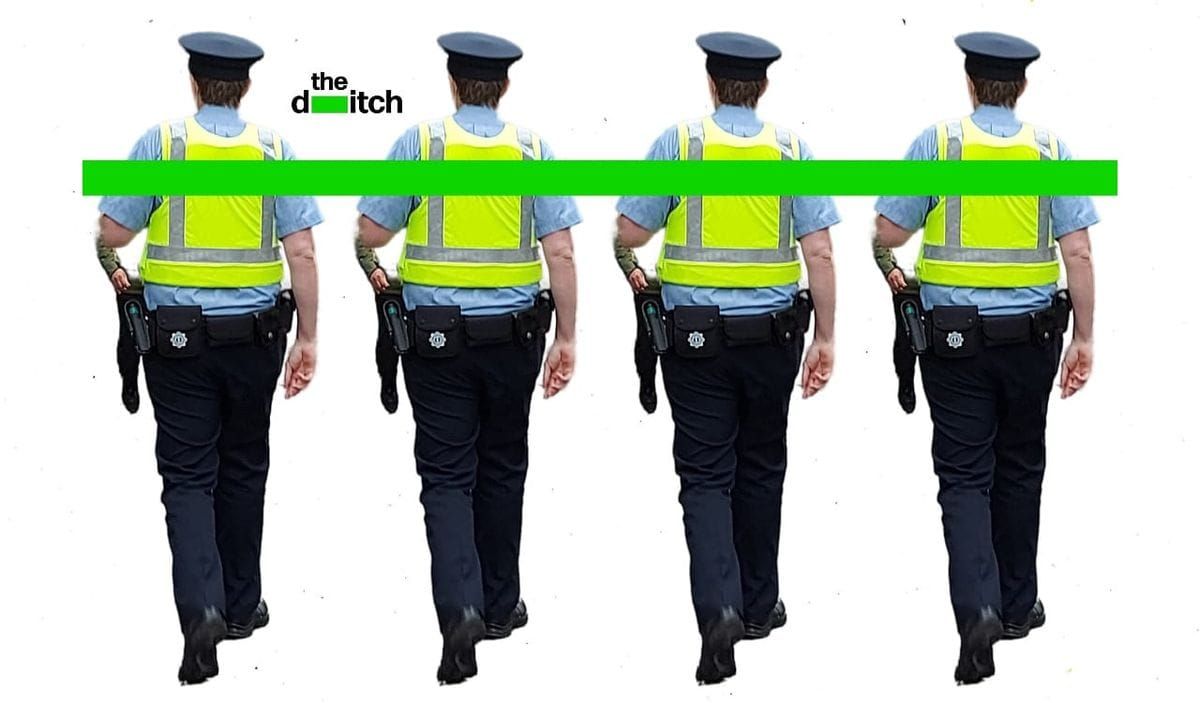
There are fewer images of these men available. That's because, unlike almost every other person charged with a serious crime, they’ve largely managed to avoid being snapped – and while attending court they can only have done so, sources with knowledge of the situation have told me, with the cooperation of the court service and An Garda Síochána.
It is true Kinahan has a higher profile than Murphy, Keane, Stratford, Clerkin and Roberts. But there's something else at play. It makes sense for the state to parade Kinahan around, to give press conferences about how no one, however powerful, can evade justice, to make his grinning face a symbol of the hubris of criminality, inevitably punished. Those before the courts, whose alleged crimes, if found to have taken place, would undermine the state itself, may remain faceless until convicted.
And even then we’re informed their corruption is an aberration committed by individual bad apples – and not inevitable within a force granted a monopoly on violence to uphold the very socioeconomic system that produces men like Daniel Kinahan in the first place.