‘We are living a nightmare’: Palestinian footballer who played Bohs in Dublin imprisoned in Israel
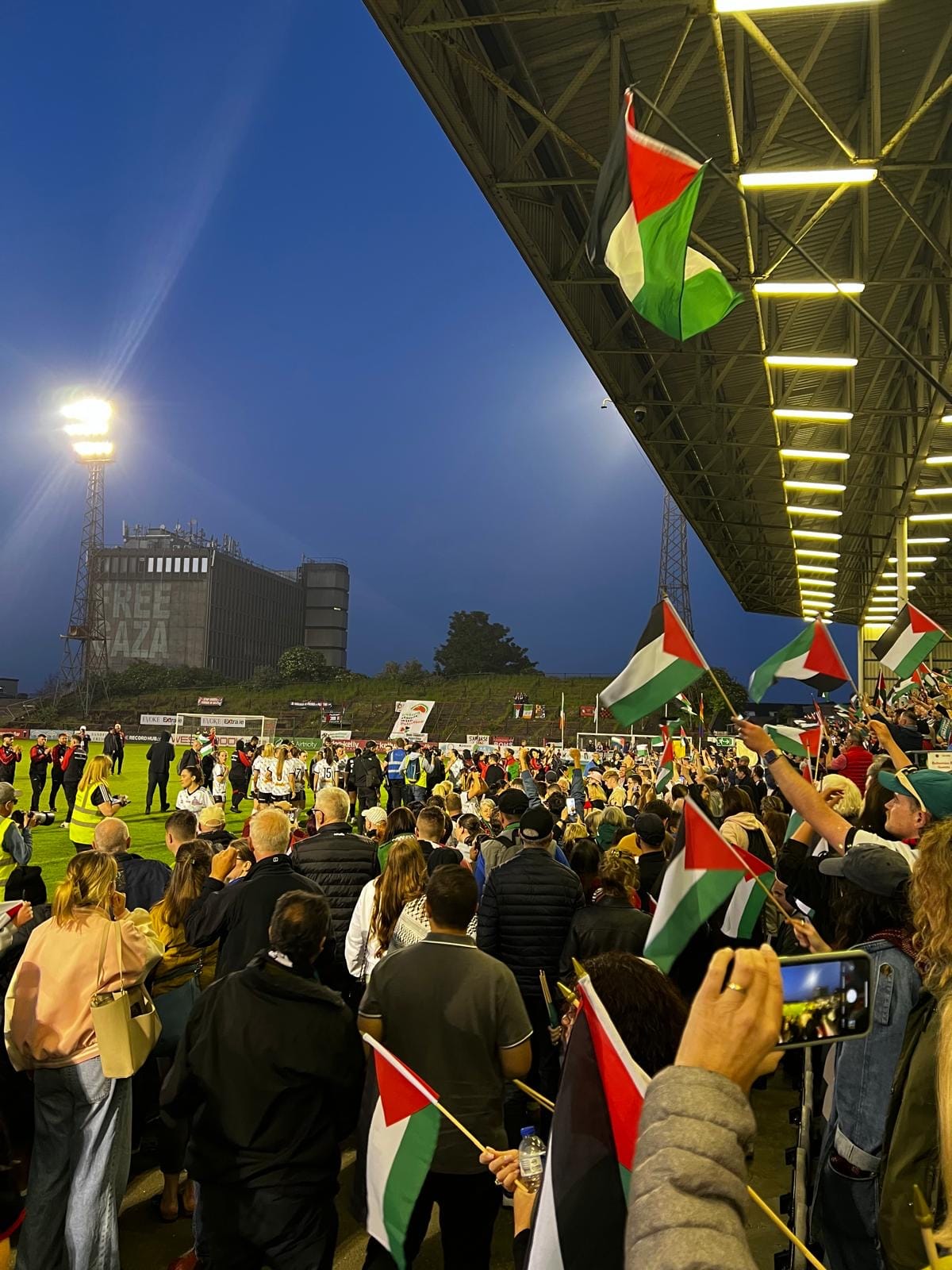
On an historic May 15 in 2024 at 7.30pm Natalie Abudayyeh stepped in front of a sold-out crowd at Dublin’s Dalymount Park.

By Alice Murphy
On an historic May 15 in 2024 at 7.30pm Natalie Abudayyeh stepped in front of a sold-out crowd at Dublin’s Dalymount Park.
The Palestinian women’s football team were kitted out to play their first ever match in Europe, a friendly fixture against Bohemian FC who proposed the event to “highlight the human rights violations in occupied Palestine”.
It was the 76th anniversary of the Nakba, Arabic for “catastrophe”, a day when Palestinians commemorate the displacement and dispossession that led to the loss of their homeland during the creation of Israel in 1948.
Watched by then Irish president Michael D Higgins and supporters waving Palestinian flags, the West Bank-based squad came from a goal down to beat their League of Ireland hosts 2-1.
Never have goals scored by a visiting side been celebrated so raucously by the home crowd, according to a match report.
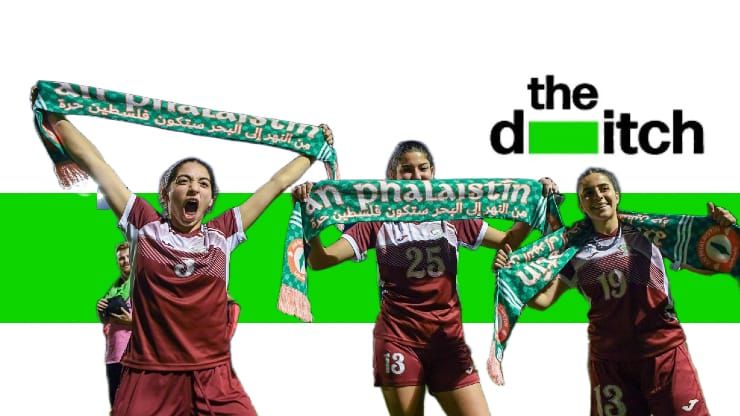
Wearing number 19, Natalie smiled for photos with a scarf reading An Phalaistín, designed by Dublin artist Spicebag, over her shoulders.
Two years later she is sitting in an Israeli jail. She faced her sixth court hearing yesterday evening. Her release was again postponed.
Natalie, 21, was abducted at gunpoint in a pre-dawn raid by the Israeli Defence Forces (IDF) on student accommodation in Ramallah, in the occupied West Bank, on 2 June, 2026.
When Natalie’s father Samer heard the news he was distraught.
“We are living a nightmare,” Samer, a pharmacist in Beit Jala, told The Ditch.
“We didn’t tell her mother until she woke in the morning and you can imagine what happened. She collapsed. She started crying and screaming and she hasn’t stopped crying since.”
A spokesperson for the Israeli military said Natalie and three other women detained around the same time were arrested “after promoting hostile terrorist activity and additional terrorist-related activities”. The Israel Defense Forces did not respond to requests for clarification from The Ditch.
Samer says the prosecution claims Natalie was on the committee of a student magazine associated with Al-Qutub, an activist student group affiliated with the Popular Front for the Liberation of Palestine, which Israel designates a terrorist organisation. Samer denies these claims and says his daughter is not associated with any political group.
He describes Natalie, the fourth of his five children, as a girl who is “full of life and knows her own mind”, a member of the Evangelical Lutheran Church and a media and journalism student at Birzeit University.
She’s a former captain of the Palestinian national women’s team and she’s focused on studying, spending time with family and playing football, said her father.
The Abudayyehs’ lawyer had been working to secure a plea bargain with the prosecution before Natalie’s sixth court hearing on Wednesday, 23 September but the decision on her release was again postponed to 20 October, according to a statement from the Evangelical Lutheran Church of Jordan and the Holy Land.
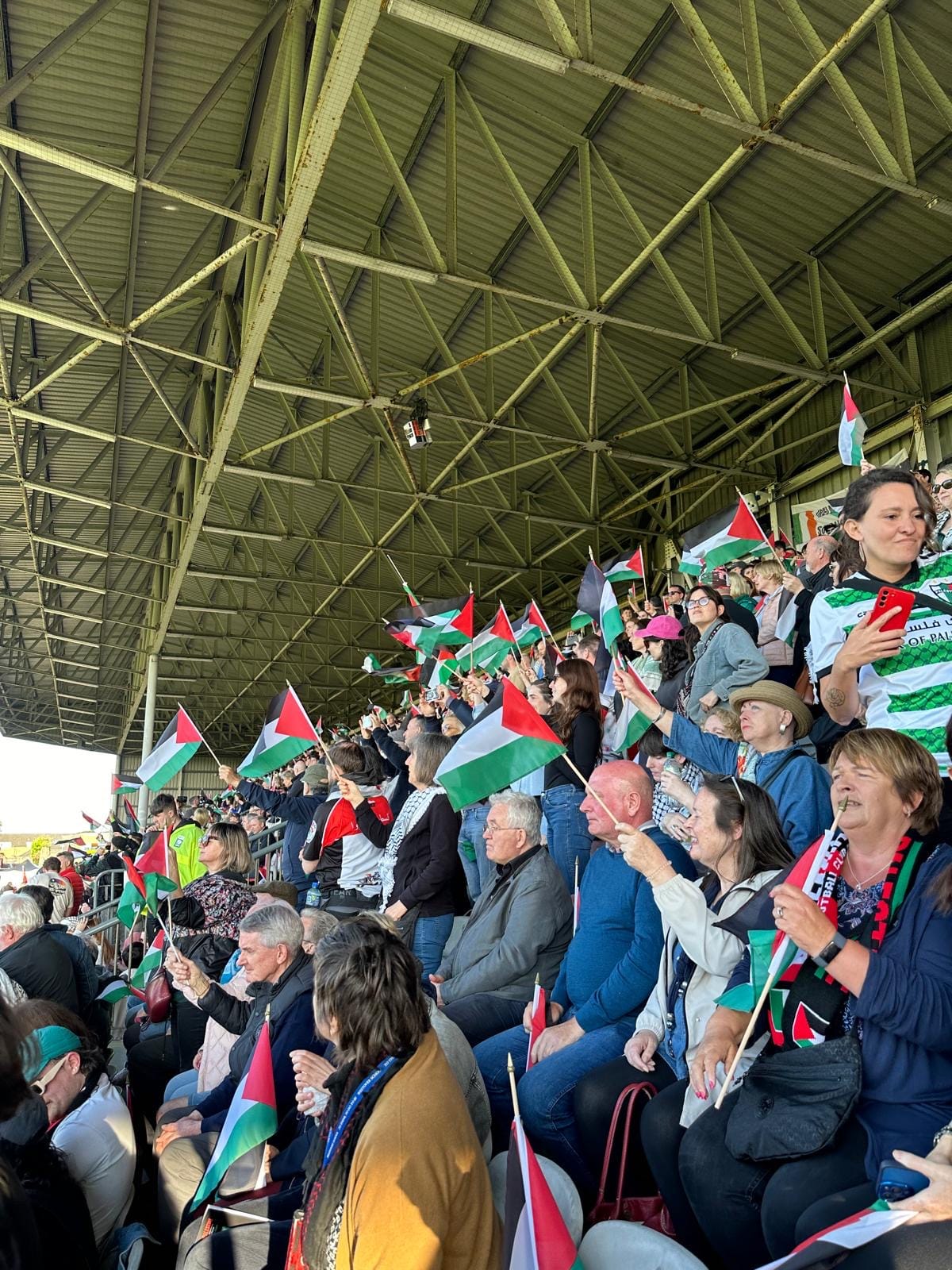
Bohemians chief commercial officer Daniel Lambert, who organised the match that Natalie played in Dalymount, says her arrest is another example of discrimination against Palestinians.
“It’s absolutely harrowing,” he told The Ditch.
“You have an international player taken in the middle of the night and essentially held hostage.
“The fact that this doesn’t make headlines shows how wholesale the dehumanisation of Palestinians is.
“Can you imagine an Israeli player taken in the middle of the night? We’d all know their name. We’d all rightfully call for them to be released,” he said.
Since Natalie’s arrest the Israel Prison Service (IPS) has denied Samer and his wife phone calls and visits to Damon Prison in Haifa to see their daughter. They have not spoken to her since 2 June. During her hearings the family must go to the courthouse in Ramallah to observe proceedings by video call.
“I can hear her voice when they ask her questions, but she can’t hear me,” Samer said.
As of September 2026, Israeli prisons are holding around 9,300 Palestinians – including Natalie – on security grounds, according to the IPS.
Of these only 1,500 have been tried. Some 3,198 inmates are in administrative detention, a policy that allows Israel to detain people who have not committed offences on the assumption that they will break the law in the future.
Because this measure is supposed to be preventative there is no limit to how long a prisoner can be held.
Prisoners are often held under degrading conditions and, like Natalie, barred from communication with their families.
Unlike Israeli settlers living in the West Bank, who are tried in civilian courts, Palestinian civilians in the same area are tried in military courts.
Human Rights Watch has said these two-tier systems discriminate against Palestinians and “far exceed what the law authorises”.
Journalists and human rights groups have documented widespread abuses of Palestinians in Israeli detention, including sexual abuse and beatings.
Israeli human rights organisation B’tselem described the Israeli prison system as a “network of torture camps” in a report titled Living Hell.
The Palestine Football Association has condemned Natalie’s arrest as “unjust” and “part of a well-documented pattern of systematic targeting of Palestinian athletes, which continues without accountability”.
The association has called on Fifa and the international sporting community to take “concrete disciplinary action… to address these ongoing violations”.
It comes as the Republic of Ireland prepares to play Israel in a controversial Nations League match on Sunday, 27 September.
The “away” game, which will be played at a neutral stadium in Debrecen, Hungary, has been condemned across Ireland’s social and political spectrum. The teams will meet again on 4 October for Ireland’s “home” match in Backa Topola, a small town in Serbia.
More than 160 Irish sportspeople have signed an open letter calling on the national team to boycott the matches and protesters gathered outside the team’s Dublin hotel on Monday.
On Wednesday evening 71 percent of respondents to a poll by the Irish Mirror said the Irish side should refuse to play.
No tickets have been sold to Irish fans and RTÉ will air a stripped-back version of match coverage, with no commentators, pundits or half-time analysis.