I like to work The Sopranos into classes I teach. Earlier this year, while running a module on narrative studies, I played one of my favourite scenes for some undergraduates.
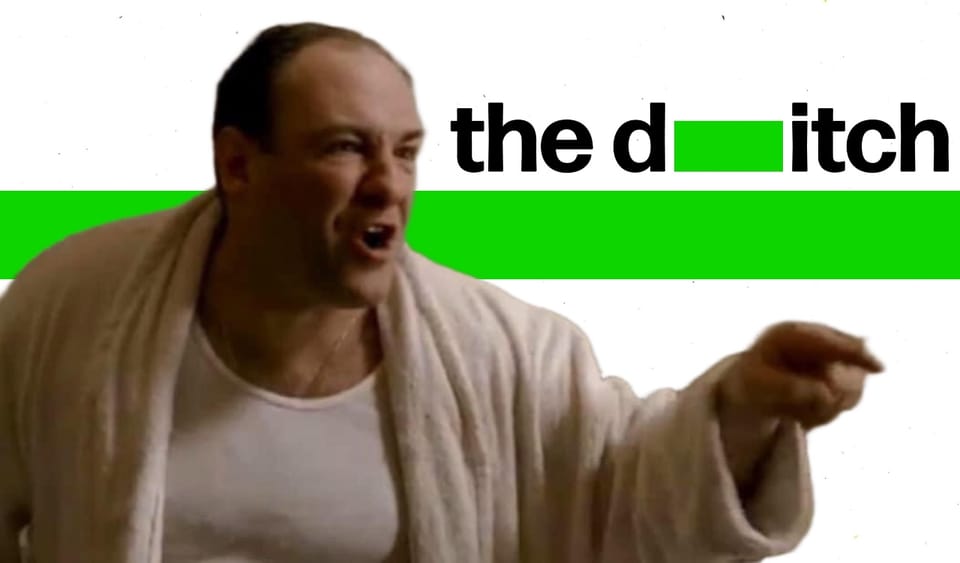
Tony, entering his kitchen in season four’s Christopher, encounters his son AJ immersed in Howard Zinn's A People's History of the United States. His wife Carmela says the boy's teacher has characterised Christopher Columbus as a vicious tyrant who would face trial for crimes against humanity if alive today, like Slobodan Milošević. “You finally read a book and it's bullshit," an irritated Tony says, telling AJ to remember everyone living in the 15th century thought the earth was flat and that landing on an island of “savages" took courage. When AJ objects, claiming Columbus's actions, enslaving indigenous inhabitants of Hispaniola, matter most, Tony erupts. “He discovered America is what he did. He was a brave Italian explorer. And in this house, Christopher Columbus is a hero. End of story!”
I used the clip to demonstrate a point Zinn made in the book AJ was reading. History isn’t a catalogue of events – it’s a set of narratives carefully constructed to serve cultural and political purposes. Tony defends Columbus, who was responsible for mass misery and death, because his status as a hero legitimises Italian-American heritage and identity. People like Tony can’t be dismissed as outsiders, as not truly belonging, if they helped bring about the creation of the United States. No Columbus, no American Dream. They discovered America.
I thought of this episode when reading about Dublin City Council’s proposal to rename Herzog Park in Rathgar. Chaim Herzog, after whom the park is named, could be considered a war criminal by today's standards (as well as the standards of his own day). The Irish man, born in Belfast in 1918, was part of a paramilitary group that massacred Palestinians. He participated in the Nakba and served as governor of the occupied West Bank. He went on to become the sixth president of Israel. Dublin City Council decided it was inappropriate to have its land named after someone like Herzog. The council was due to make the removal of Herzog’s name official this week. Until external forces intervened.
Here comes the obedience
“When you think it couldn’t get any worse in Ireland regarding animosity toward Israel and the Jewish people, it just did,” US senator Lindsey Graham, who has suggested it may be appropriate for the Israel Defense Forces to drop a nuclear bomb on Gaza, posted on X. Herzog's son Isaac – current president of Israel, recently accused by a UN Independent International Commission of Inquiry of inciting genocide – also felt compelled to speak. "Removing the Herzog name, if it happens, would be a shameful and disgraceful move," he said in a statement. “We hope that the legacy of a figure at the forefront of establishing the relations between Israel and Ireland, and the fight against antisemitism and tyranny, will still get the respect it deserves today.”
Fianna Fáil and Fine Gael responded as they always do when our “allies" disagree with how politics in this country is going. They responded with immediacy and obedience. Taoiseach Micheál Martin demanded the motion be withdrawn entirely, later adding that such measures “will be seen as antisemitic”. His colleague, tánaiste Simon Harris, declared his complete opposition to the plan, calling it offensive to the principles of an “inclusive republic" and imploring other party leaders to oppose it. Our media behaved precisely as the moment demanded, publishing multiple screeds accusing the council of antisemitism, including a piece by chief Rabbi Yoni Wieder calling the move a "cruel hammer blow."
The establishment and its media had set the terms of the discussion: in this house, Chaim Herzog is a hero – and no argument or objection will change that. End of story!
In a sense it’s of no consequence that council CEO Richard Shakespeare suddenly discovered a legal technicality and withdrew the motion, citing an “administrative oversight”, just as political pressure was intensifying.
Whether or not Herzog's name stays on a plaque, the southern government has materially assisted the genocide of Palestinians in Gaza and the West Bank. Almost daily airlines carrying weapons for a genocide fly through Irish airspace without sanction. US warplanes with American military officials regularly land in Shannon before continuing to Israel. The taoiseach has repeatedly lied about legal advice he received about the Occupied Territories Bill, which passed both houses of the Oireachtas but remains blocked, because he does not want to upset tech giants upon which our economy depends. Since October 2023 we’ve traded €97 million in so-called “dual use” goods with Israel.
And yet removing Herzog is urgent. Because, as Zinn said, the way we think about what came before determines what we’re willing to accept in the present. This is why during moments of social upheaval people topple statues and rename public spaces. The Bolsheviks removed Tsarist monuments across Russia in 1917. Allied forces dismantled Nazi symbols throughout Europe in 1945. Iraqis destroyed Saddam's likeness across Baghdad in 2003. All enforced a certain way of interpreting the past.
Herzog's name on a park in Dublin does something similar. Note how Micheál Martin accused Dublin City Council of engaging in a “denial of our history”. That history tells us that Israel is a democracy worth honouring, that its president deserves respect and admiration. Our political class may criticise Israel's current Likud-led government for its actions in Gaza. But it never questions the state itself, never takes any action that would obstruct Israeli crimes. That distinction is important to Washington and Tel Aviv. It is so important that Israel interferes in Irish local politics to prevent even small gestures of solidarity with Palestine.
Earlier this week The Ditch reported on another case. In 2015, Israel's Dublin ambassador worked with a Fine Gael councillor to defeat a Kildare County Council motion calling for a boycott of Israeli military equipment. Leaked emails from Israel's foreign affairs ministry show “constant contact" between the ambassador and the councillor and help drafting a counter-resolution. There were coordinated social media operations using what the ministry called “Facebook soldiers”.
We were once discovered
Launching his memoir in October, Palestinian author Tareq Baconi, in conversation with writer Ta-Nehisi Coates, described Zionism as “the myth of people going back to a land that has no people”. That narrative has powered a project of colonisation for more than a century. Resistance begins when we stop believing it. “Words are very powerful,” he said. “Our job is to link that narrative with the political."
To call Chaim Herzog a hero is less about the past than the kind of politics our leaders wish to obstruct in the present. And that politics is one of solidarity, one that sees the continuity between the ethnic cleansing of Palestine in 1948 and the ongoing genocide in Gaza today. One that recognises honouring a founder of that state, built on racism and displacement, is a tacit endorsement of its crimes. A politics that understands the parallels between our own experiences of colonialism and those of the Palestinian people.
It is the likes of Martin, not the council nor its representatives, who are engaged in a “denial of our history" – forgetting we were once the “savages” someone else “discovered”.